What are the differences between the Vietnam eVisa vs Visa on Arrival? Each type of visa has distinct differences in terms of eligibility, application procedures, processing time, and fees. But which is better and how can you figure out which is more suitable for your needs? In this post, we will clarify these questions by providing a detailed analysis of the full application process for both types of visas.
Eligible applicants
According to current regulations, any foreign citizen with a valid passport can apply for a Vietnam visa, including an eVisa, which allows a stay of up to 90 days. However, citizens of 13 specific countries—France, Germany, Italy, Spain, the UK, Japan, South Korea, Russia, Denmark, Sweden, Norway, Finland, and Belarus—are eligible for a visa exemption for stays of up to 45 days. If you wish to stay beyond the visa-free period, you can contact Wolo Tours for assistance in obtaining a long-term stay visa.
While the Visa on Arrival is available to travelers from over 150 countries who enter Vietnam through international airports, the eVisa is accessible to passport holders from all countries.
Visa form
The Vietnam eVisa is issued as a PDF file and serves as an official visa, but no stamp or label is placed in the passport.
In contrast, for a Visa on Arrival, travelers receive only a visa approval letter online. Upon arrival at a Vietnamese airport, they must present the letter to immigration officers to obtain a visa stamp in their passport.
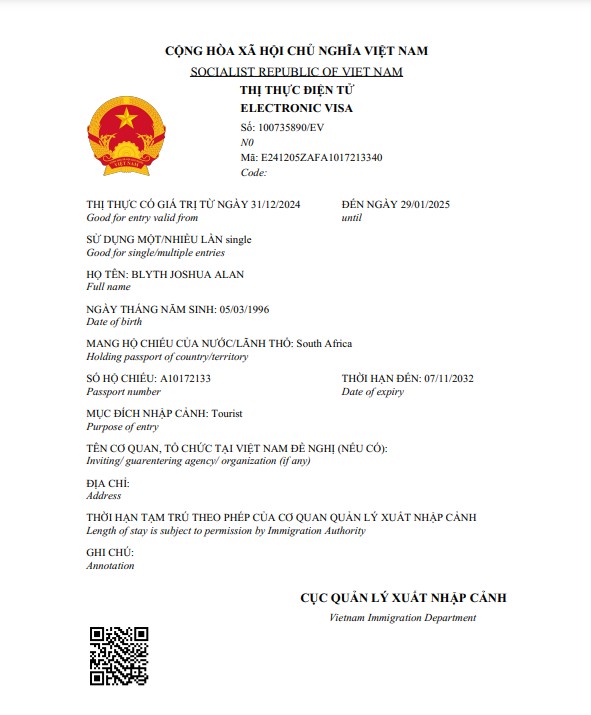
Vietnam E-visa sample
Good for
– The Vietnam visa on arrival is suitable for urgent travelers who need to apply for a Vietnam visa and enter the country within a day, as expedited processing allows for same-day results.
– Vietnam e-Visa: As of August 15, 2023, Vietnam grants e-Visas to citizens of all countries and territories, regardless of purpose, including tourism, family visits, business, and trade.
Visa validity
– Vietnam e-Visa provides applicants with several options for visa duration and entry types based on their needs. These include a 1-month (single or multiple entry) and a maximum 3-month (single or multiple entry) visa.
– In contrast, the Vietnam Visa on Arrival is less flexible, as it is only valid for one month and allows a single entry.
Visa fee
– For a Visa on Arrival, the total cost includes:
- Approval letter fee: Paid online to obtain the visa approval letter.
- Stamping fee: Paid upon arrival at the airport to get the visa stamped into your passport.
– For a Vietnam eVisa, the fees depend on how you apply:
- Applying directly through the Vietnam Immigration website: $25 for a single-entry visa and $50 for a multiple-entry visa.
- Applying through other channels: Fees start from $46, depending on nationality, processing time and visa type.
Processing time
The processing time for a Vietnam eVisa is typically 5 – 7 business days. However, the processing time for a Visa on Arrival varies depending on the visa type.
- A tourist visa generally takes 5 – 7 working days to process.
- A business visa requires approximately 7 working days.
Fortunately, some agencies offer express services, allowing applicants to obtain a visa approval letter within just a few hours.
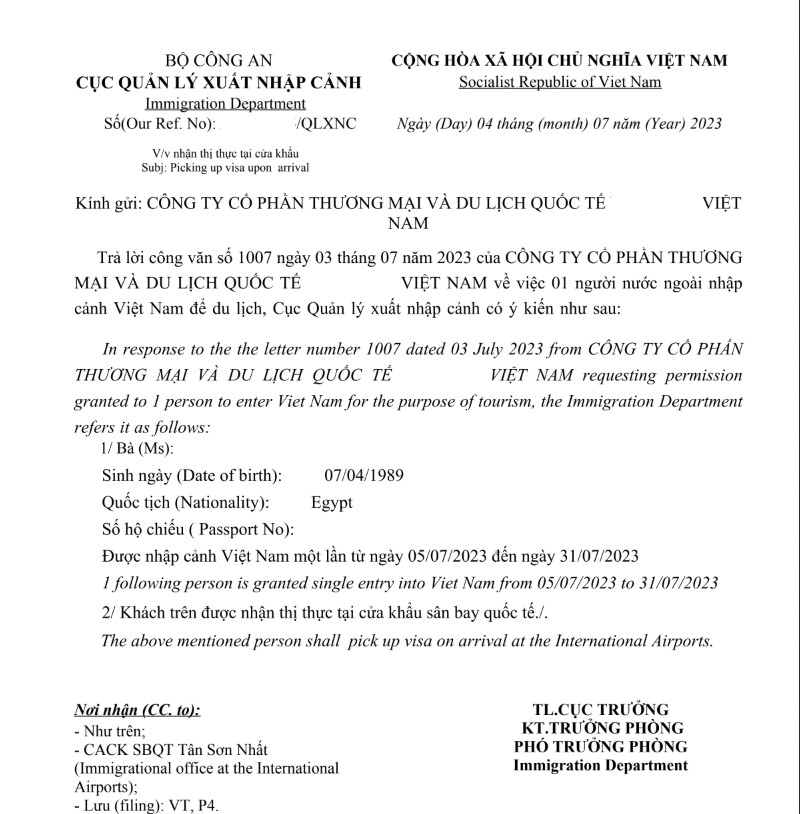
Vietnam eVisa vs Visa on Arrival
How to apply
– For Vietnam e-Visa: Applicants visit the official website of the Vietnam Immigration Department, fill in the required information, and make an online payment.
– Visa on Arrival (VOA): Applicants must contact a travel agency in Vietnam or go through us to obtain an approval letter, then receive the visa upon arrival at the entry checkpoint.
Entry gates
Holders of a Vietnam e-Visa can enter through 42 international checkpoints, including airports, land borders, and seaports.
In contrast, Visa on Arrival (VOA) is only applicable at international airports such as Nội Bài (Hanoi), Tân Sơn Nhất (Ho Chi Minh City), and Đà Nẵng.
Vietnam eVisa vs Visa on Arrival: Which one to choose?
Choosing between a Vietnam eVisa vs Visa on Arrival (VOA) depends on your travel needs, entry method, and urgency. Here’s a detailed guide to help you decide:
– Choose an Vietnam e-Visa if:
- You want a hassle-free, fully online application process without the need for intermediaries.
- You are entering Vietnam via airports, land borders, or seaports (as e-Visas are accepted at 42 entry points).
- You prefer to have your visa approved in advance to avoid waiting in line at the airport.
- You don’t need an urgent visa, as processing takes 5 – 7 working days.
- You want a more affordable option, with a fixed official fee and no extra service charges.
– Choose a Visa on Arrival (VOA) if:
- Your nationality is not eligible for an e-Visa.
- You need a last-minute visa, as VOA services often offer expedited processing within a few hours.
- You are arriving by air at one of Vietnam’s international airports (Hanoi, Ho Chi Minh City, or Da Nang), as VOA is not available at land borders or seaports.
- You are comfortable applying for a visa approval letter through a travel agency before departure and paying a separate stamping fee upon arrival.
The comparison above provides a clear overview of the Vietnam eVisa vs Visa on Arrival for Vietnam, helping you determine the best option for your trip. If you need more information about Vietnam visas or require fast and easy assistance with obtaining your eVisa, Wolo Tours is here to help!